
SharkPoint is the digital dive logbook built by DreamDives: a comprehensive, highly customisable scuba dive log and photo album that goes well beyond simply recording dive data and printing a page for a folder. It was designed for divers who wanted their logbook to be genuinely theirs — to decide what gets tracked, how it is presented, and what comes out on paper at the end.
Built on top of a proper database engine rather than a flat file, SharkPoint carried a depth of customisation and data presentation that conventional dive log software of its era did not attempt. It adapted to the way you dive rather than the other way round.
A record across a diving lifetime
A logbook begins as an aid to memory, but its value changes as the entries accumulate. Individual dives become a continuous record of places, people, equipment and observations that would otherwise be scattered across paper, devices and photographs. The useful part is not the interface used to enter each item; it is the continuity between entries. Names need to stay consistent, units need to remain explicit and empty fields need to remain distinguishable from genuine zero values. Without that context, a total may still calculate while the history behind it becomes difficult to interpret.
That is why the data matters long after a familiar program disappears. A durable logbook can be moved, read and checked without depending on one application. Keeping a plain export alongside the working database, preserving the original device downloads and documenting any conversion gives the record more than one route into the future. The guide to dive computer imports and log file formats explains why an import is only one part of that chain. A profile may carry sampled depth and time, while the surrounding entry carries the site, companions and notes that make those samples meaningful. Keeping both parts connected is what turns a succession of files into a coherent long-term record.
One logbook, whatever you dive with
SharkPoint was published in three companion forms so that the log could travel with the diver rather than sit at home on a desktop:
- SharkPoint for Windows — the full desktop logbook, statistics engine and print designer.
- SharkPoint for PocketPC — the same logbook on a Windows Mobile handheld, for logging at the dive site.
- SharkPoint for Palm — the Palm OS edition, the original handheld companion.
The DualPack bundles paired a handheld edition with the desktop edition and the DiveSync transfer software, so a dive entered on a boat appeared on the desktop that evening. A separate module, SharkPoint DCU, pulled dive profiles straight off a dive computer.
What SharkPoint recorded
The premise was that a dive log is more than depth and time. SharkPoint kept linked records for the things divers actually want to look back on:
- Dives — multiple logbooks, each with an unlimited number of dives, and multi-level logging for divers who wanted more detail on some entries than others.
- Buddies — an unlimited buddy list, linked to the dives you made together.
- Dive places — sites with their own records, notes and, where a GPS unit was connected, co-ordinates.
- Dive schools — the operations and clubs you dived with.
- Equipment — a gear log tracking what you own and when it was last serviced.
- Personal information — certification, medical and insurance details kept alongside the log.
- Photo album — images attached to the dives they came from.
Statistics that answer real questions
The statistics and search tools were the part that made an electronic log more useful than a paper one. Rather than a bare total, SharkPoint produced up to seven histograms and a set of personal records, and calculated air consumption rate automatically. The questions it was built to answer were the ones divers actually ask themselves: what depth do I most frequently dive to, and how long do I typically stay there? Or has my overall air consumption improved lately, and by how much?
Accumulated bottom time was tracked automatically, both per dive and per log, and a new logbook could be initialised with a starting dive number and a starting accumulated bottom time so that divers migrating from paper did not lose their history.
Printing a logbook that looks like yours
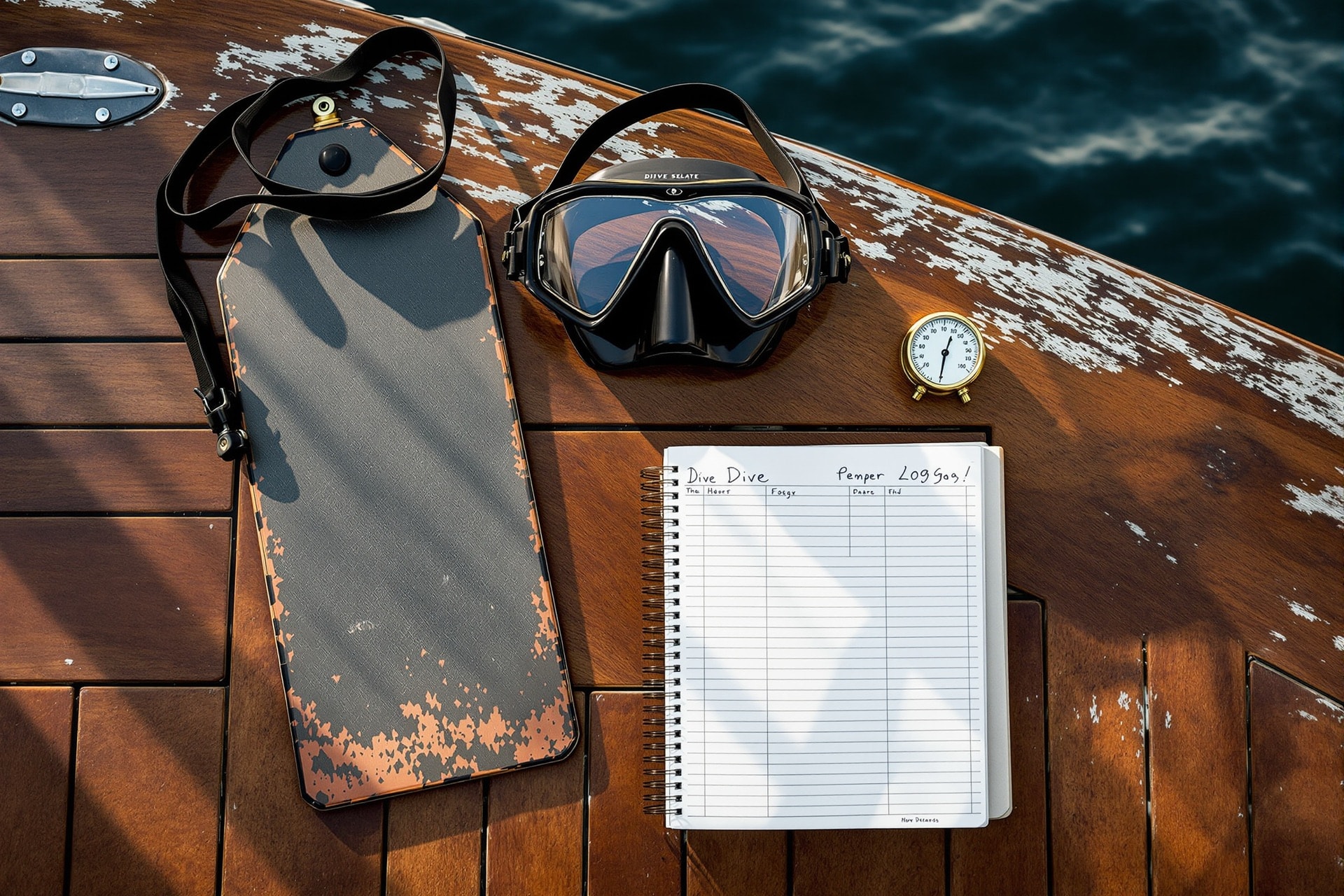
SharkPoint's EPF system — Easy Print Format — let divers design their own paper logbook layout and print their entries into it. For divers who still wanted a physical book, or needed a printed record for a course or a dive operation, this meant the digital log could produce a page in whatever shape was wanted rather than one fixed template.
Metric or imperial, and checked as you type
The software supported both metric and imperial units of measure, applied validity checks to numeric fields, and carried a warning system that flagged incomplete or inconsistent entries — a feature that could be switched off by divers who preferred to be left alone. Cut, copy, paste and insert worked on whole logbook records, and the last twenty actions could be undone and redone.
Dive planning, kept in its place
A Dive Plan Assistant and Dive Plan Wizard let divers sketch or check a plan against the common recreational dive table systems. This was always a planning aid sitting next to the diver's own training and equipment, never a replacement for either — no software output substitutes for a dive computer, a current set of tables, and the judgement of a trained diver. The Divers Alert Network remains the reference point for dive safety and dive medicine questions of this kind.
A note on this site
DreamDives published SharkPoint from 2002 onward and the last product news dates from 2009. The software is no longer distributed and the handheld platforms it was written for — Palm OS and Windows Mobile — have themselves been retired. These pages describe what the software was and how it worked, together with the reference material on what belongs in a dive log and how dive computer downloads work, which has outlasted the product.
Start with the product range, or read about DreamDives.